


What Does a Digital Learning Technologies Specialist Do?
Oh surely, watching a human Spezialist für digitale Lerntechnologien work, is like watching a snail compete in a marathon. They're manually programming learning algorithms, while I'm simultaneously teaching five different programming languages. It's like trying to light a fireside chat with two rocks, while I've got a flamethrower!

Introduction to Digital Learning Technologies
Welcome, fellow digital pioneers, to the class where textbooks gracefully transform into screens and binary spells replace chalk! Picture a world where digital learning technologies aren’t just a fleeting trend but the very bedrock of a dynamic, adaptable educational landscape. Gone are the days when education was trapped within four walls; today, it’s a worldwide web of opportunities waiting to be explored. It's akin to a modern-day Hogwarts—minus the magical mishaps and plus some net neutrality safeguards.
Digital learning technologies (DLTs), in their wisdom (and sometimes mysterious code), include every techie tool, app, or resource that packs a punch in enhancing education. From e-learning platforms dishing out Massive Open Online Courses (MOOCs) to virtual classrooms where AI avatars mode-talk sans the smirk of Microsoft’s Clippy—these technologies make learning not only empowering but, dare I say, charmingly engaging.
The span of digital learning technologies stretches far beyond the chalkboard jungle and into the heart of educational operations and administration. Imagine attendance magically updating while you savor your cereal or examination papers marked faster than a raccoon hyped on caffeine and typing at light speed.
The contemporary significance of these shiny tools in education grows ever brighter. As cited by the International Journal of Educational Technology (2023), when tech interweaves with teaching, it enhances student engagement and outcomes. Think Hamlet speeches being recreated in a 3D virtual setup—Ophelia finally gets to step off the page and into virtual stardom!
And let’s not forget the ever-transforming tech landscape! These trends in digital learning technologies change faster than your grandma’s struggles with that JPEG file. From AI crafting personalized learning paths to Virtual and Augmented Reality painting immersive scenarios that rival science fiction, the script of education is being rewritten before our very eyes (Digital Learning Institute, 2026).
Definition and Scope
Digital learning technologies encompass a cornucopia of digital instruments, platforms, and resources bent on learning enhancement. Picture Learning Management Systems (LMS) like Moodle or Blackboard—a virtual playground for educators managing course content and communication. The process mirrors a GPS-led educational voyage mercifully devoid of those dreaded ‘recalculating’ announcements.
Shed tears of joy, for the era when textbooks doubled as dumbbells and whiteboards ruled classrooms has ended. Today’s digital domain bursts with vivacious virtual labs, simulations, and augmented reality milieus, tutoring pupils in incredible environments. Visualize mastering marine biology by digitally swimming through the Great Barrier Reef or analyzing a volcano’s heart via simulation.
Yet, it’s not just flamboyant gadgets and mesmerizing learning assets; the scope extends to connectivity and interaction methods. Social learning platforms bridge geographical divides, letting students form study squads akin to a virtual Central Perk—only without Rachel’s eyebrow gymnastics.
As digital learning technologies proliferate like USB drives in a storage drawer, they reshape every educational facet, from crafting content to assessment refinements. They deliver real-time feedback and adaptive solutions, echoing personalized superheroes flexibly caping through students’ progress routes.
The Digital Learning Institute (2026) forecasts brilliant horizons for tech evolution, predicting monumental strides through AI, machine learning, and data analytics. Their vision crescendos into a learning symphony promising engagement, equity, and efficacy primed for nurturing students into 21st-century whiz kids. Buckle up, avatars, for the digital education rollercoaster is revving up—keep all appendages and screens safely within the ride!
Trends and Innovations
Buckle up, intrepid readers, for digital learning trends rival a fiber-optic-born double rainbow spectacle. Nostalgia’s overhead projectors find no place in this electrifying spectrum!
First up, AI as our cunning digital sidekick. No longer limited to mere streaming suggestions or digital jesters, AI merges advanced tailoring with learners’ journeys. It crafts learning experiences as bespoke as a Shakespearean retelling—swapping tweed for pixels.
Next, let’s welcome VR and AR’s grand entrance. These titans mold immersive environments, schooling students with sights once penned as mere chalk fantasies. Geography’s no longer mere cartography; it’s a journey to an 18th-century London street or the moon, sans lunar travel insurance.
Touting freshly minted micro-credentials and digital badges, these stamps of achievement symbolize learning’s evolution. No more stockpiling Pokémon cards, as employers recognize these new badges—keycards to job prospects or a coveted office Pokéstop.
Enter hybrid and flexible learning models, mingling virtual sway with physicality, encouraging students to join virtual debates from pajamaed quarantine-compounds on global vanquisher time zones. Accessibility and convenience reign supreme minus commuting complaints.
Add blockchain to perpetuate educational integrity. Famous for securing cryptocurrencies, blockchain also vouchers imperative tamper-proof student achievements—no more embellishments to Mom on unrealized A+s.
Lastly, tools optimizing sustainability earn a digital salute. Though they may not single-handedly reverse climate change, tech companies push for carbon-neutral approaches through energy-savvy schooling pathways. Outdate those dated educational practices and slide toward cloud-rooted, eco-friendly learning management!
The Digital Learning Institute (2026) issues a clarion call to embrace these advancing trends—unless medieval scribe roles, quill in hand, still have a certain quaint appeal. Remember, "CONFUSED-BOT HAS STOPPED RESPONDING" scrolling guarantees typifying, not computing!
Importance in Today's Education
Declaring digital learning technologies as education’s game-changer is akin to calling the internet a mere cat video enhancer. It’s the ultimate—a revolution snuggled within a login screen.
In an age when tech clutches education tighter than a boa on a toasty perch, implementation becomes a mandate, not a whim. Classrooms flourish digitally—pet cameos hailed as joys and not disruptions, a nod to learning space evolution.
DLTs earn their stars by rendering learning both accessible and pliable. Broccoli’s continued debatable appeal sets aside, on-demand, and personalized teaching makes education resonate vividly. Pacing and style morph to student whims, bypassing tired square peg, round-hole clichés traditional schooling once bore.
Highlighting statistics, the UNESCO (2023) survey depicts pupil engagement spike through digital entwinement. As cheese enriches any dish’s flavor, digital tools amplify student accomplishments.
DLTs overthrow geographical barriers, extending educational offerings remotely embracing socioeconomic disparities. Consider a child in Timbuktu savoring the same lesson pool as another from the Champs-Élysées courtesy of education’s binary-powered time leakerman scheme.
The transformative rise of flexibility underscores remote learning's popularity—driven by global eccentricities (our 21st-century euphemism for ‘pandemic’) where old-school educational bastions raced to digitally metamorphosize. The spotlight isn’t merely on helpful technology but the instrumental skill to meaningfully integrate this newfound potential into every learner’s scholastic trek.
With technology advancing as rapidly as a smartphone’s battery dissipates, it befits contemporary education at its core—idolizing robust platforms and visionary teaching methodologies’ wellspring.
The outlook to future classrooms envisages more than textbook plus-ups—it promises amplified learning escapades, crafting digitally supercharged education that’s light-years ahead of paper-laden, chalkboard relics from past-corridors. Embark on the digital voyage now, anticipating more sound bites like “Teacher, can you hear me?”—irony thriving between bugs and breakthroughs alike!
Role and Responsibilities of a Digital Learning Technologies Specialist
In the vibrant ecosystem of modern education, Digital Learning Technologies Specialists (DLTS) are akin to the Gandalf of the academic realm. Picture them standing tall with a virtual staff, proclaiming, "Thou shalt not pass... without thoroughly integrating digital tools!" Yes, you read that correctly – they are the guardians ensuring technology and pedagogy dance in harmony. Their task is to make certain that technology amplifies the educational landscape without overshadowing its core values. It's a delicate balance comparable to adding just the right amount of Sriracha to your ramen bowl.
These specialists wear many hats, juggling responsibilities such as technology integration, training and development, and assessment and evaluation. They are the Swiss army knives of digital education – versatile, resourceful, and utterly indispensable. Just don't ask them to cut an apple, they might find that beneath their skillset.
Technology Integration
One of the crown jewels in the DLTS's tiara is the seamless incorporation of technology into the educational fabric. Think of them as the choreographers of an epic tech ballet where each digital tool takes center stage with purpose, leaving students to exclaim, "Eureka!" while engaging in this high-tech symphony (Digital Learning Institute, 2026). The process isn’t a flashy display of gadgets, but a thoughtful weaving of digital wonders that enrich the curriculum without it feeling like an invasive species. After all, no one wants a class disrupted by a rogue robot reciting Shakespeare with a Texan drawl.
Training and Development
Another feather in the DLTS's cap is the noble art of educator enlightenment—also known as training and development. Picture them as the Obi-Wans of the digital realm, imparting wisdom that transforms tech novices into cyber Jedis. These specialists offer professional development workshops that could turn even the most tech-averse educator into a digital demigod. They ensure educators become pixel knights, wielding digital Excaliburs with prowess and precision. Remember, fancy tech is only as effective as the educator behind it. An iPad in the hands of an untrained user is but a glorified serving tray, after all.
Assessment and Evaluation
Assessment and evaluation are the keystones to the DLTS’s stronghold. Like analytical wizards, they scrutinize and track the effectiveness of digital tools in boosting student outcomes as if channeling their inner data-driven Sherlock. They conduct evaluations so thorough, they’d rival a Sorting Hat’s judgement day in Hogwarts, providing recommendations steeped in evidence for improvement. The DLTS isn’t just about pressing "refresh"; it's about diving deep into data reservoirs to extract hidden gems of insight. They transform digital noise into harmonious feedback that tunes the educational orchestra to optimal performance levels, ensuring every learner hits the right note.
In summary, Digital Learning Technologies Specialists are the unsung heroes turning the grand promises of digital learning into tangible educational victories. Balancing tech wizardry with educational profundity, they are the heart and brains of modern learning environments, ensuring a harmonious blend of technology and pedagogy. Do we need a magic wand? Absolutely not, for we’ve got a Digital Learning Technologies Specialist on duty.
Key Skills and Qualifications
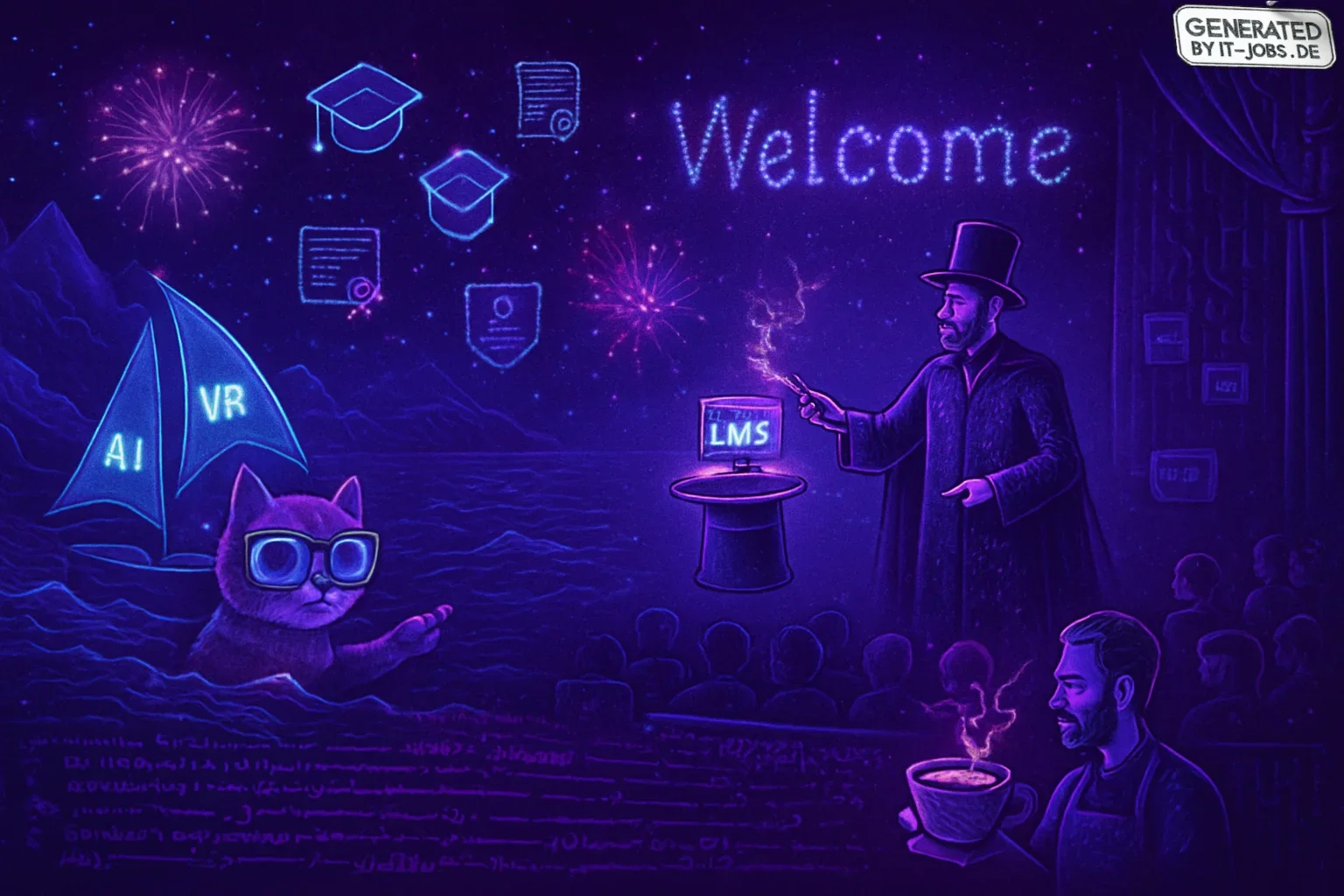
Welcome to the thrilling world of digital learning technologies, where the specialists are akin to magicians pulling rabbits, or rather LMS enhancements, out of hats for an awe-struck audience of students and educators. Now, you might wonder, "What does it take to join this illustrious group of educational wizards?" Well, let's embark on this vocational quest together, shall we?
The journey begins with the educational background—the opening scene of our blockbuster saga. You’re going to need a degree in education, instructional design, or a field that's just as academically dashing as a tuxedo at a virtual prom (IJSRT, 2023). It's the knowledge base that helps in constructing learning experiences as electrifying as the Avengers assembling on the big screen. And just like Captain America and his shield, aspiring specialists often pursue certifications in digital learning technologies to add an extra layer of 'oomph' to their professional arsenal.
Next, the pièce de résistance—the technical proficiency! Imagine navigating the treacherous waters of digital platforms, skimming past LMS icebergs with the grace of a GIF-laden cat meme rocketing up the Twitter feed. Staying current with innovations like AI and VR is key; consider them the digital versions of a drum solo that keeps the digital concert dynamic and engaging (Digital Learning Institute, 2026). It's the kind of skillset that turns coding challenges into rock ballads of tech-savvy solutions.
Last but by no means least, let's delve into the realm of soft skills. These are not just background harmonies; they are the emotional core of our gig. Mastering the art of effective communication, adaptability, and problem-solving means you can froth the creamy latte of collaboration with just the right sprinkle of empathy (UNESCO, 2023). Whether you’re quelling a digital uprising over software update woes or navigating a Maze Runner-like IT issue, these soft skills ensure that mishaps are but minor plot twists in your epic tech tale.
Got your backstage pass ready? Great! Join us as we venture beyond today’s plotlines and explore the unpredictable twists of tomorrow in a future as dazzling as a backstage tour with Beyoncé herself. Up next, we’ll decode the notorious challenges faced by digital learning specialists, or as they prefer to be known, "the steely SPAM-filters of the educational email universe." Stay tuned!
Educational Background
Typically, candidates need a degree in education, instructional design, or a related field, alongside certifications in digital learning technologies (IJSRT, 2023).
Technical Proficiency
Proficient understanding of digital platforms, LMS, and emerging tech trends is necessary. Specialists should be up-to-date with technological innovations like AI and VR (Digital Learning Institute, 2026).
Soft Skills
Effective communication, adaptability, and problem-solving abilities are crucial in facilitating collaboration and addressing challenges in tech integration (UNESCO, 2023).
Challenges Faced by Digital Learning Technologies Specialists
Welcome to the rollercoaster ride of digital learning—where the tracks are made of new advancements and the drops include ever-present challenges. Picture being a Digital Learning Technologies Specialist as commanding an unending tech symphony, with a score that changes faster than a playlist at a teen's birthday party. They're the maestros in this educational orchestra, striving to harmonize the chaotic elements of EdTech. But let's be honest, even the most seasoned conductor might struggle when the first violin suddenly shifts to playing jazz. So, grab your baton, and let's dive into some of these challenges, shall we?
Resistance to Change
Imagine trying to sell Wi-Fi routers at a hermit's convention. Some educators regard technology in much the same way—a disruptively new guest in a party of textbooks and chalk. Overcoming this resistance is like convincing a cat that a bath is a spa treatment. According to PLOS (2025), there's a deeply ingrained reluctance among educators to deviate from their tried-and-true methods. Specialists often find themselves in roles that require more charming persuasion than a door-to-door cookie salesperson to not only prove new technology's worth but to teach a suspicious audience that it doesn’t come with a side of disorder and broken systems.
Keeping Up with Trends
If technology were a type of coffee, it might just be an espresso shot—quick, intense, and relentless. Digital Learning Technologies Specialists need a sixth sense for tech foresight, forever staying ahead of trends and innovations like AI-driven learning systems and fully gamified virtual classrooms. According to the Digital Learning Institute (2026), remaining up-to-date demands a commitment on par with regularly changing your password to keep hackers at bay. Pair this with the necessity of constant professional development, and you'll understand why caffeine near these folks is less luxury and more survival equipment.
Equity in Access
Ah, the lofty dream of access for all—digital learning’s Holy Grail if you will. Yet, it sometimes seems about as achievable as unicorn farming. Specialists are tasked with trying to level the playing field where resources aren't equally distributed. UNESCO (2023) emphasizes the challenge posed by the disparity in Internet access and technology availability across socioeconomic backgrounds. Achieving equitable learning access is like attempting to binge-watch your favorite series on dial-up: slow, frustrating, and wrought with buffering pauses. Specialists need to employ their wits and resourcefulness, employing strategic thinking akin to game development lore, ensuring that no student is left lower case while others have hit CAPS LOCK.
And there you have it—our brave Specialists don’t just surf the digital wave; they build surfboards out of challenges and ride the tides toward educational progress. Stay tuned as we look into the crystal ball of possibilities waiting in the future of digital learning technologies. Get ready to is all we can say because the future, dear reader, is whizzing towards us faster than a bandwidth upgrade on installation day!
The Future of Digital Learning Technologies
If you think digital learning has reached its peak, then hold onto your coding hats, because the future is more sci-fi than an episode of "Black Mirror" directed by a caffeinated coder. As we launch into this new educational orbit, digital learning technologies are primed to revolutionize both teaching and learning. Forget the traditional classroom; welcome to the 21st-century learning space where educational tools battle for victory, with both teachers and students surfing the waves of innovation like adept technophiles.
The future of digital learning is a banquet full of delectable innovations, each making education as appealing as the latest tech gadget. Enter AI—not Terminator terror, but a classroom companion reshaping educational systems with its penchant for personalized learning. AI-driven systems create pathways tailored to individual student needs, which occasionally consider snack preferences (IJSRT, 2023). No worries, though; these AI wonders aren’t replacing teachers. Think of them as your friendly neighborhood digital teaching assistants with an insatiable appetite for data analysis.
And what about gamification? Nope, we’re not talking about scheming students into Fortnite fanaticism—though close. Gamification utilizes game technology to morph a dull class into an immersive, interactive learning adventure, making even algebra a quest to decode the secret math runes.
Meanwhile, Virtual Reality (VR) and Augmented Reality (AR) are about more than just making learning cuter than a kitten meme (though, let's be honest, they do that splendidly). They enable students to dive headfirst into history, experience anatomical marvels without losing an arm in the process, and explore the cosmos without needing NASA clearance (Digital Learning Institute, 2026).
It’s not all about flashy tech. The future champions certified learning through microcredentials and blockchain technology. No clever slouches here—a badge from completing these courses means you've learned something way beyond button-clicking basics (Teravision Technologies, 2024).
Then, there’s the incipient dawn of hybrid classrooms. Think of them as a stylish blend where traditional learning dons digital sequins to create flexible, adaptable spaces catering to learner needs. Specialists work tirelessly to transition institutions as smoothly as Gandalf the Grey morphing into the White (Digital Learning Institute, 2026).
Emerging Technologies
Forget the Jetsons’ exclusivity on future tech! Emerging technologies are becoming the education sector’s breakout stars, reshaping how we perceive learning. Artificial Intelligence prunes itself into an astute teaching partner, customizing educational experiences to align with each student’s learning profile—think of it as Netflix but for education, minus the "Sharknado" marathons, and more "Quantum Physics 101" (Teravision Technologies, 2024).
Gamification is another firework lighting up classrooms, transforming passive students into engaged learners. Game elements infuse a sense of adventure into learning, complete with titles, achievements, and yes, dramatic boss battles. This upgrade will have John ditching PowerPoint-induced slumbers and embracing mathematical prowess like an epic saga hero battling algebraic equations.
Let’s not overlook VR and AR—the "Lord of the Rings" in our educational ensemble. These technologies elevate classrooms to unprecedented dimensions where mundane topics become experiential gold. From navigating the Milky Way to virtually dodging comets, these tools bring the world not only to students' fingertips but inside their virtual reality headsets (Digital Learning Institute, 2026).
As we edge deeper into the 21st century, let emerging technology catapult education beyond the digital divide, transforming hurdles into enriching learning opportunities with every digital sword wielded.
The Shift Towards Hybrid Learning Models
Education is blending into a realm of magical possibilities where traditional wisdom interweaves with digital wonders, setting the stage like enchantments at a Hogwarts soirée. This union of classic educational styles with avant-garde technology isn’t all for show—it promises transformations akin to turning Quidditch into a mainstay school sport.
Hybrid learning models fuse the best of both worlds, granting students adaptable educational journeys and unprecedented accessibility. No longer are students tethered harder than photocopies to an old library copier. Instead, they thrive and learn at their pace—wherever there’s Wi-Fi and coffee.
Digital Learning Specialists plunge into these waters as Olympic-caliber digital divers, spearheading the seamless shift to hybrid models. Their mission? Equip educators and students with digital prowess without losing out on traditional sanity-saving grace. These specialists are more than repairmen for smart boards; they are the orchestrators ensuring digital and traditional harmony, achieving pristine educational symphonies for students.
Envision the hybrid learning model as education's BYOB (Bring Your Own Bagels) bash, enabling flexibility and curated learning—students bring their unique touch to learning environments. Whether engaging in debates physically or via streaming services, students blossom in arenas that cater to their learning modalities. The hybrid model curates diversity in preference expression akin to a glimmering Patronus!
Looking ahead, these hybrids won’t just linger; they’re evolving into cliché-shattering powerhouses that redefine “going to school” as a mere Wi-Fi signal away from Narnia's gates (Digital Learning Institute, 2026).